I rebuilt SoulSync from the ground up and made it fully open source (GPL-3.0, on GitHub). It’s a privacy-first mood tracker: you log how you feel, attach activities and notes, and it hands back honest, plain-language patterns from your own data. Nothing ever leaves your phone — no account, no cloud, no analytics.
This is a short tour of two things I’m happy with: the architecture that keeps it fast and testable, and the free CI pipeline that signs and ships every build without spending a cent.
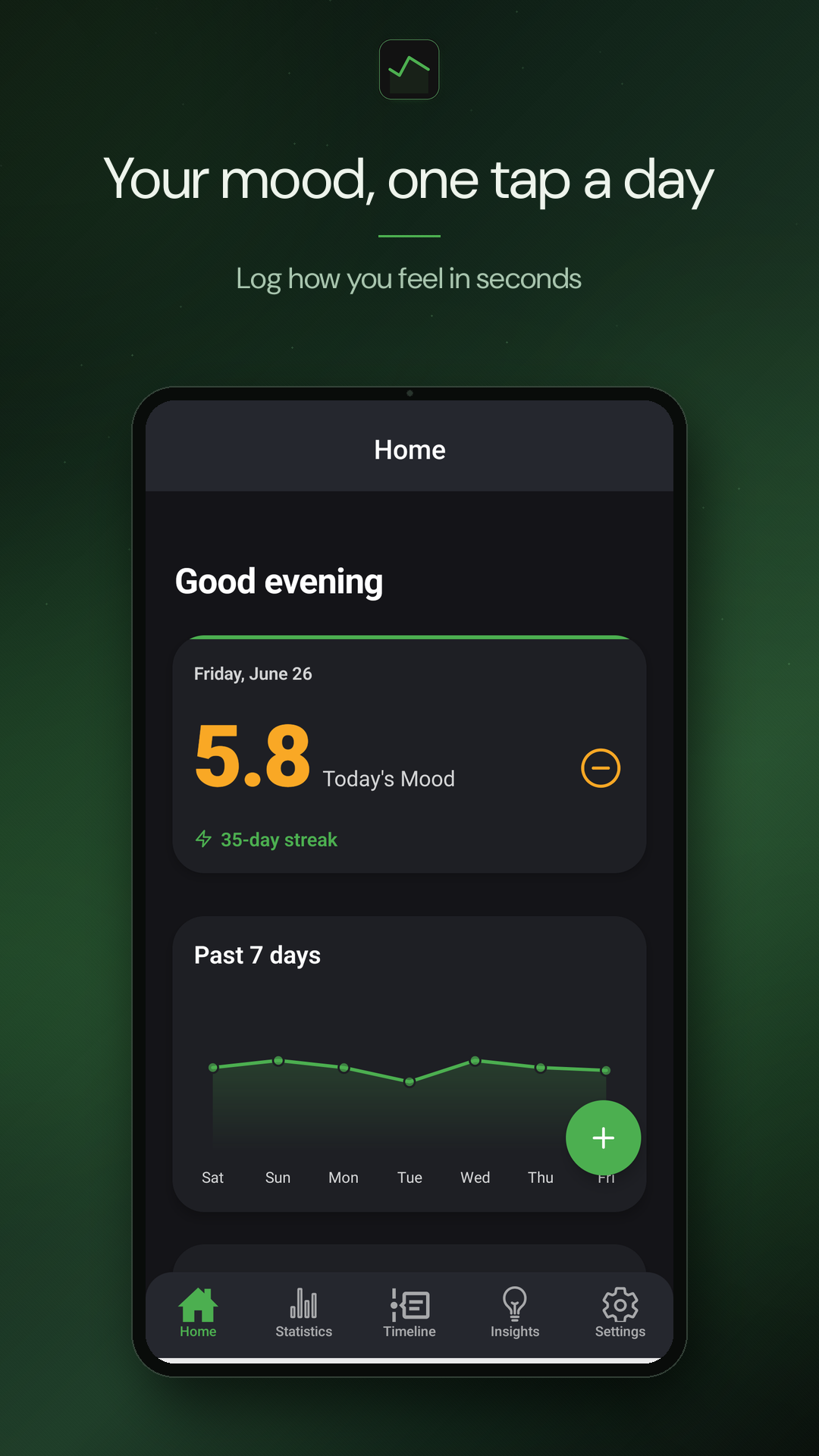
The stack
Expo SDK 56, React Native 0.85, TypeScript in strict mode. It’s plain CNG — no custom native modules — so android/ is generated, never committed, and Expo Go runs the app faithfully during development.
Everything persists to a local SQLite database. There’s no server to talk to, which is the whole point: your mood history is some of the most private data you own, so it stays on-device.
Architecture: pure functions you can test without booting the app
The rule that keeps SoulSync honest is a hard split between I/O and logic:
databases/— a thin facade over small modules (entries,activities,groups,user-settings), each doing CRUD against SQLite. Schema changes only ever go through a versioned migration system that runs automatically on launch.components/visualisations/transforms/— every chart is fed by a pure function (weeklyMood,streak,activityImpact,recoveryPatterns,heatmap…). Give it rows in, get plot-ready data out. No database, no React.components/forms/hooks/— form state, mood-value snapping, and validation live in hooks, so the form components are thin renderers.
Because the load-bearing logic is pure, it’s covered by 603 passing tests across the transforms, date math, and database layer — and you can modify a chart’s maths with confidence without ever opening the emulator. tsc --noEmit is clean, lint is zero-error, and a pre-commit hook runs typecheck + lint + tests.
One genuinely tricky area worth calling out: timezones. Query windows are computed in local time, and the streak logic that used to be a fragile recursive-CTE in SQL is now a tested pure function. Getting “what day did this entry happen on” right for someone logging at 11pm is the kind of edge case that only a test suite keeps honest.
What’s new: statistics that don’t lie, and health correlation
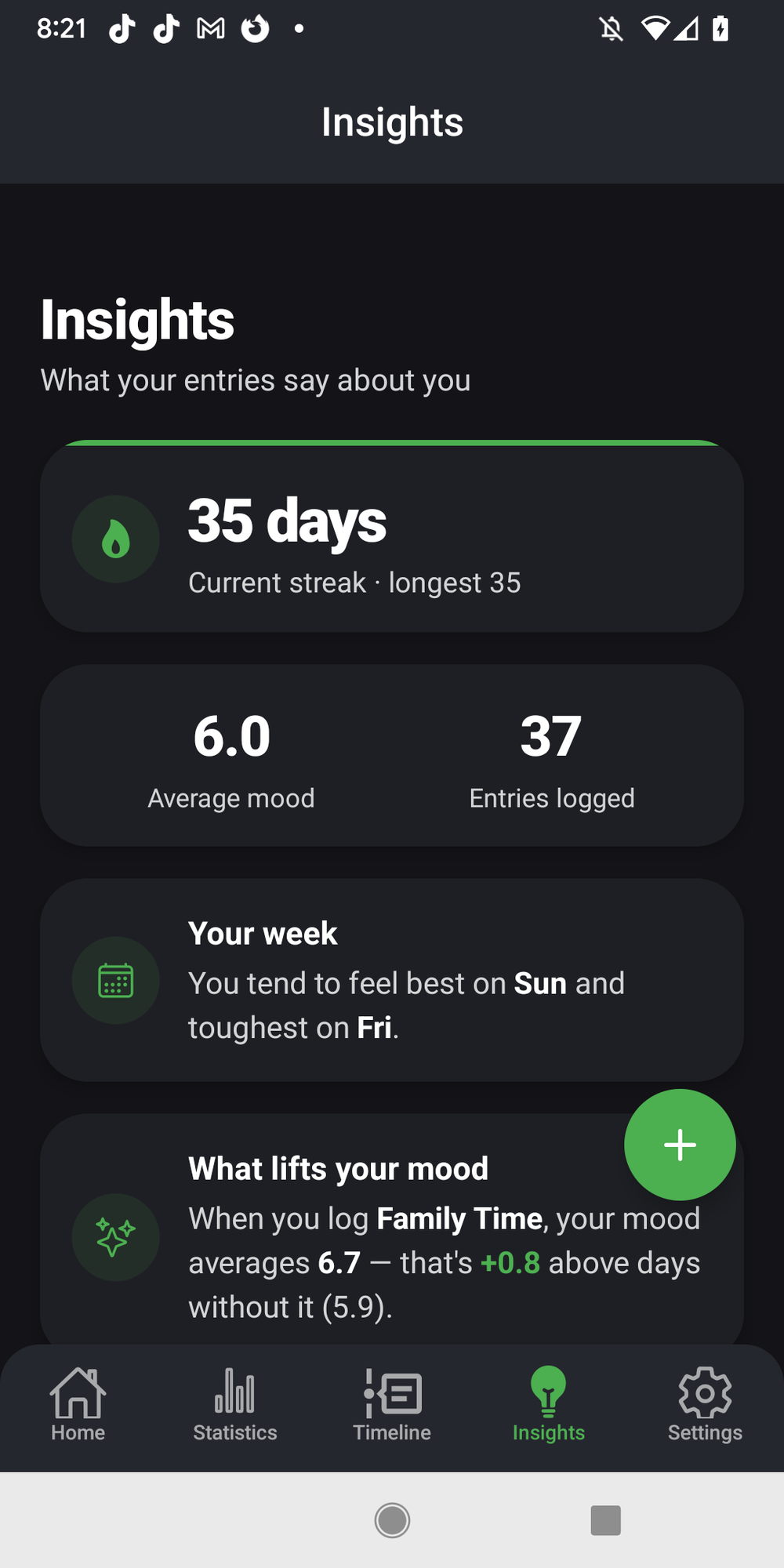
The upgrade isn’t just cosmetic. SoulSync now does rigorous stats — with/without activity correlation, day-of-week patterns, month-over-month comparison — and an Insights tab that translates them into plain language.
The one I’m proudest of: health-data correlation. Pull in heart rate, resting HR and HRV, and SoulSync correlates them against your mood with a real Pearson r, a two-tailed p-value, and the sample size n — plus a tappable explainer so the numbers actually mean something. No hand-wavy “you seem stressed.” Real statistics, computed on your device.
The CI/CD pipeline: signed releases, for free
Here’s the part I like most as an engineering problem. EAS Build’s free Android tier has a monthly quota. CI on a public GitHub repo is free and unlimited. So the entire Android release lane runs on GitHub Actions instead.
A single workflow (release-apk.yml) does the work. On every run it:
- Checks out, sets up Node 22 + JDK 17 + Gradle.
- Runs
expo prebuildto regenerateandroid/from config plugins (arm-only ABIs, R8 minify + resource shrink for release). - Decodes a signing keystore from a GitHub secret into the runner’s temp dir only — never the workspace.
- Builds a signed release APK and a signed AAB with Gradle.
The keystore is parity-verified to be the same certificate EAS signs with, so a CI-built APK updates cleanly over a Play-Store install. That detail matters — a mismatched signature means users can’t update, only reinstall.
What makes it pleasant to live with is the trigger convention:
- Push to
main→ build and publish a rollingmain-latestprerelease — an installable signed dev build at a stable URL, refreshed on every merge. - Push a
v*tag → create the versioned GitHub Release for that version, idempotently. - Manual dispatch → build any branch and upload the APK as a run artifact, for one-off QA.
One invariant ties it together: git tag == app.json version == APK versionName == release tag == asset filename. Everything about a build is traceable back to a single version string.
Try it
SoulSync is on the Google Play Store — no account, no sign-in, just install and log. Prefer sideloading? Grab the latest signed APK from GitHub Releases. And since it’s open source, you can read every line of the code that touches your data.
If you find it useful, a Play Store review helps a tiny open-source project more than you’d think.